
Phase 01 · Build
Onboard a data source
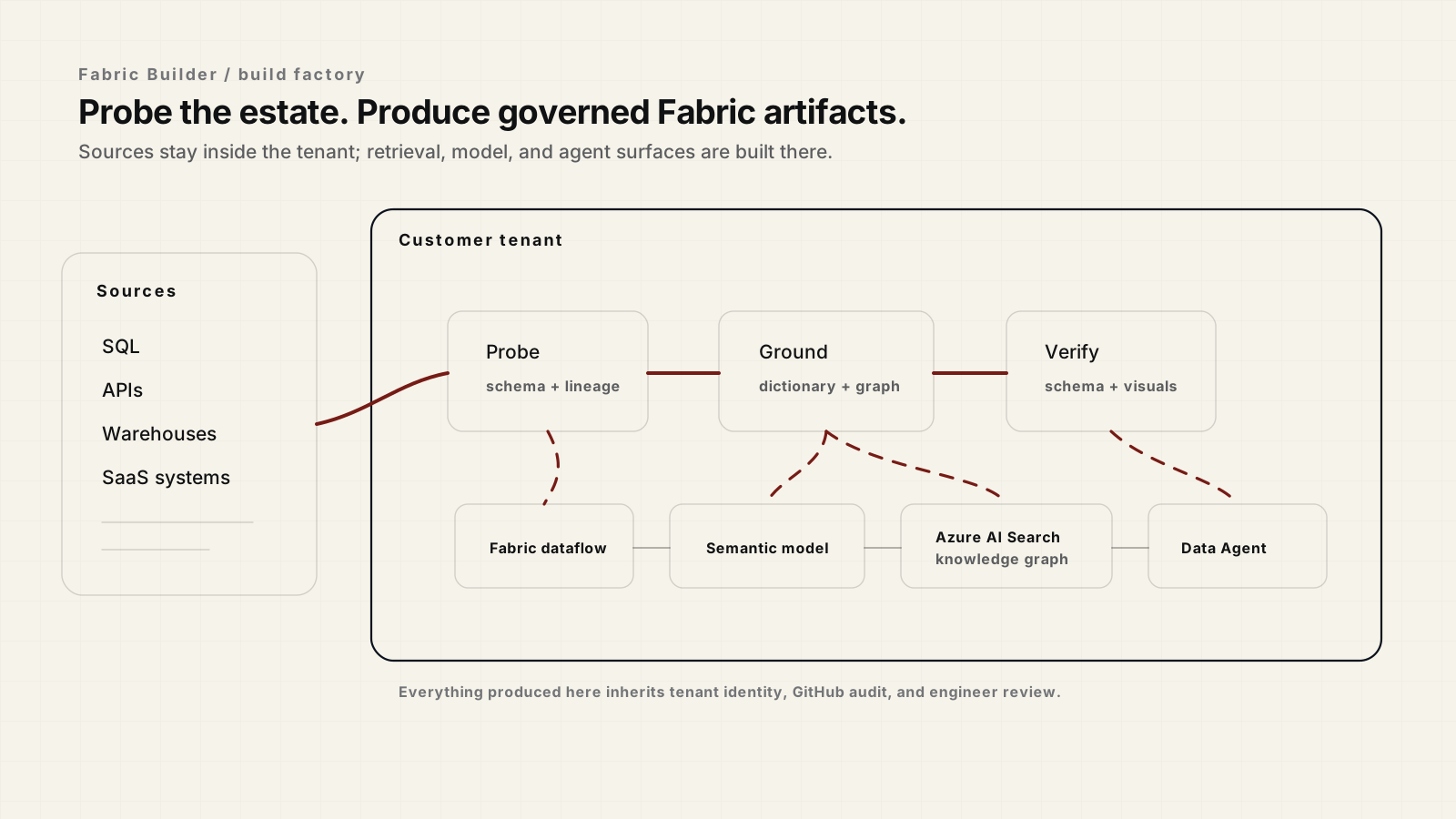
Fabric Builder probes existing infrastructure, generates embeddings, and produces the dataflow, Power BI reports, semantic model, Azure AI Search knowledge graph, and Fabric Data Agent.
Fabric Builder is the specialist AI tool an engineer brings to your Microsoft Fabric estate. It came out of our own delivery work with Konica Minolta.
Your company’s data model is its foundation. Measures, dimensions, relationships — when that’s clear, everything downstream works; when it drifts, everything else cracks.
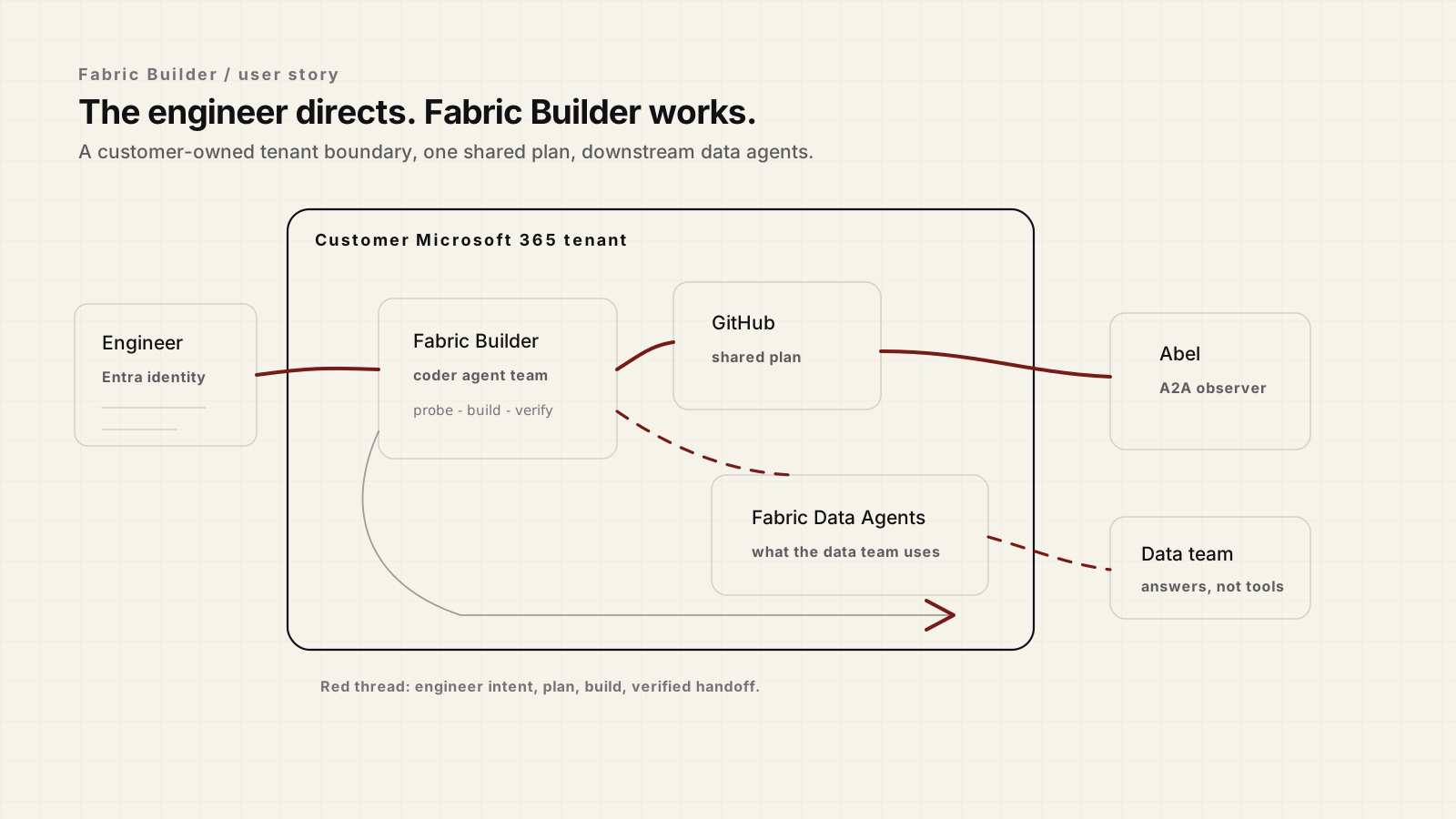
Fabric Builder is the AI an engineer brings to your Fabric estate. A coder, not a governor — it refines its skills and its memory on the engineer’s corrections and the estate’s evolution. An engineer — yours or one of ours — operates Fabric Builder to probe your existing infrastructure (SQL, APIs, warehouses, SaaS), build the dataflows, Power BI reports, semantic models, and Fabric Data Agents your team needs, and tend the estate over time: monitoring data health, auditing security, verifying visuals, surfacing insights. The engineer directs. Fabric Builder works. GitHub holds the shared plan.
Your data team never talks to Fabric Builder. They talk to the Fabric Data Agents it creates — grounded in your knowledge graph, ready to answer.
We did it for our own e-conomics and Business Central data. It works the same way for any source you bring us. Your data stays in your Microsoft 365 tenant. Your foundation grows with you.
Fabric Builder runs a three-phase cycle — Build, Use, Tend. Most “AI for data” products stop at Build and Use. Tending is the differentiator.
Fabric Builder probes existing infrastructure, generates embeddings, and produces the dataflow, Power BI reports, semantic model, Azure AI Search knowledge graph, and Fabric Data Agent.
The data team asks questions in natural language. The Fabric Data Agent answers, grounded in the RAG pipeline and the semantic model Fabric Builder built.
The differentiator. Monitor data health, audit security, verify visuals, surface insights — the model stays sharp as the business evolves.
Seven verbs the engineer operates across those three phases — each grounded in the tenant, each auditable through GitHub.
Point it at a new data source — SQL, API, warehouse, SaaS — and it extracts schema, relationships, and available documentation.
Direct it to create dataflows, Power BI reports, semantic models, Azure AI Search indices, and Fabric Data Agents the team will actually use.
Configure what it monitors, what it audits, which insights to surface, and how often it verifies its own work.
Plans, issues, and decisions live in the customer’s GitHub repo — or the Runi Services engagement repo. Every action is auditable and assignable.
Render Power BI reports, dashboards, and semantic-model outputs in a real browser before they ship. Visual regressions, accessibility failures, and broken renders are caught while the engineer can still fix them.
Push artifacts to the customer’s Fabric workspaces, Power BI, and AI Search indices — through their identity, not ours.
View what Fabric Builder built, why, and when. Audit its reasoning through the shared plan — nothing ships without a trail.
Two views. The first shows the user story — who talks to what, where the tenant boundary lies, how Abel observes. The second zooms into the build factory — what happens during onboarding when Fabric Builder probes a new source and produces artifacts.
Fabric Builder is a team of agents coordinating through MCP tools, grounded in a RAG pipeline that stays current with the customer’s data estate. The control surface is the engineer’s — every action flows through their Entra identity.
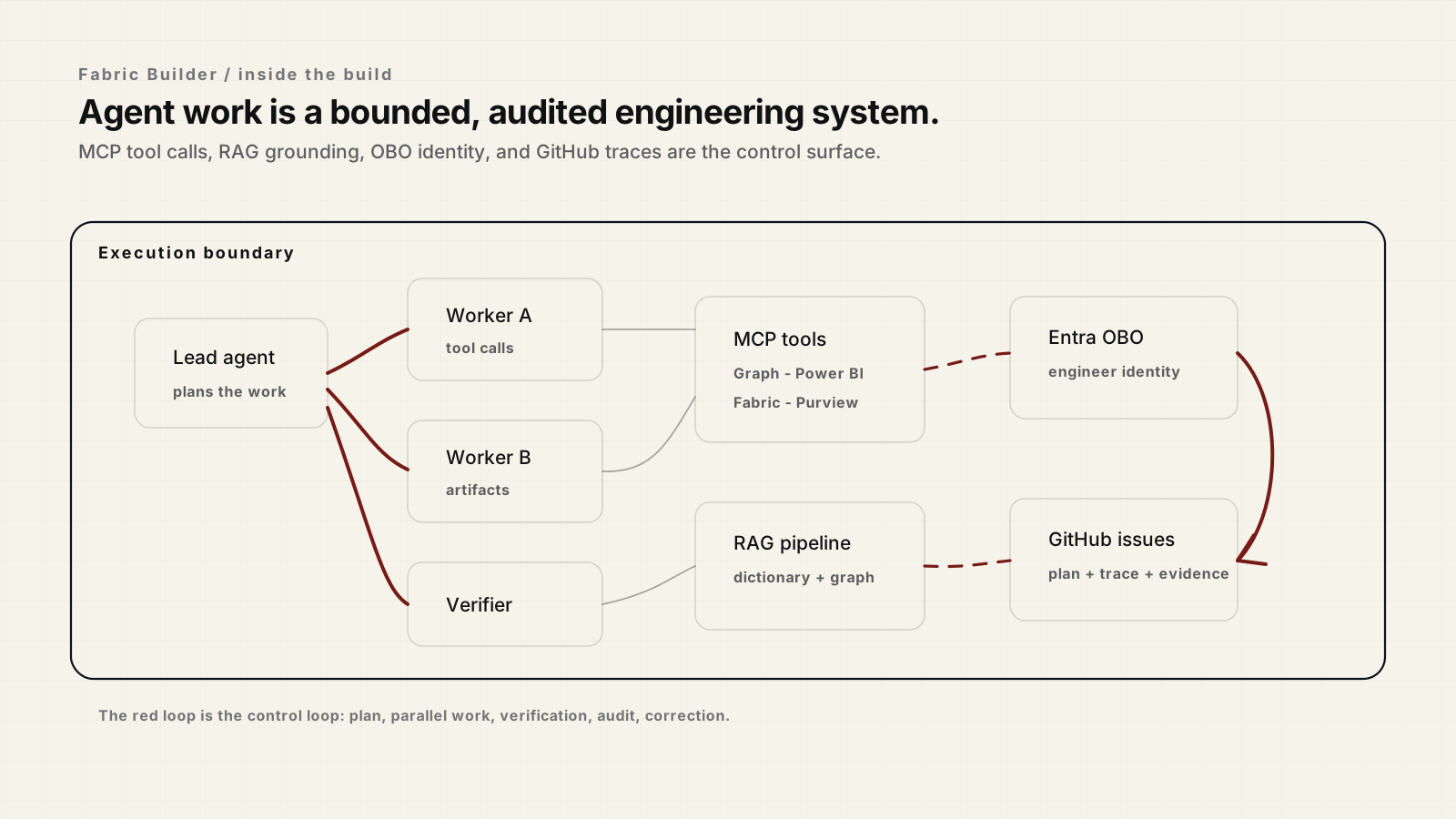
MCP tools. Fabric Builder loads Microsoft Graph, Power BI REST, Fabric, Entra, and Purview as MCP servers. Every tool the agent team calls is an MCP invocation; every call is audited.
RAG pipeline. A data dictionary captures the vocabulary the business uses to describe its data. A knowledge graph in Azure AI Search holds the relationships. Embeddings are generated on source probes and refreshed on downstream changes. Retrieval is gated by the engineer’s identity and the tenant boundary.
Agent coordination. A lead agent plans. Worker agents run tool calls in parallel. A verifier agent checks visuals and schema before deploy. The engineer sees the plan, the tool calls, and the verification evidence in GitHub issues.
Azure services. Azure OpenAI for reasoning. Azure AI Search for the knowledge graph. Fabric for dataflows, lakehouse, and Data Agents. Power BI REST for PBIR artifacts. EU-resident where the vendor offers it.
Identity and deployment. The agent user exists in the customer’s Entra. Every outbound call to Microsoft Graph or Power BI uses On-Behalf-Of tokens — the engineer’s identity, not ours. The tenant boundary is hard; Fabric Builder cannot read or write outside it.
Observability. Every agent action writes a trace. Traces are reviewable in GitHub issues alongside the shared plan. Errors surface to the engineer, not to the end user.
Skill and memory refinement. Fabric Builder is a coder, not a governor. It refines its skills on every correction from the engineer — what worked, what didn’t, which patterns to prefer next time — and it refines its memory on the estate’s evolution: schema changes, new sources, retired measures. The longer it runs, the sharper it gets.
Harnesses. Fabric Builder ships on two parallel paths. Claude Code is the preferred build experience — tight edit-run loops on the engineer’s workstation. The Microsoft-platform-native path runs on Copilot Studio with GPT‑5.4 plus an agent team, delivered through the GitHub Copilot CLI as the agent shell. Both harnesses share the same MCP tool surface, the same RAG pipeline, and the same tenant boundary. SDK parity is deliberate.
Three things that matter for this product specifically: Fabric Builder runs in your Microsoft 365 tenant, your data doesn’t leave it, and the agent itself carries an Entra identity you own — created, managed, rotated, and revoked by you.
If you prefer not to host this yourself, we offer the same system managed on Runi Services’ Azure — EU-sovereign (Sweden Central default). Same architecture, same identity discipline, same audit surface. The difference is who owns the tenancy and signs the Azure invoice.
Fabric Builder is sold two ways, because the audience is two kinds of buyer. Pick the one that matches who runs your Fabric work today. Both paths fit inside the firm’s project-engagement model — no retainers, scoped work.
Runi Services brings an engineer — and Fabric Builder — to your estate for a defined scope. Fixed-fee or consumption-based. Ideal when you don’t have a dedicated data-platform engineer yet.
Enquire about engagementYour engineers use Fabric Builder as their platform tool, with optional governance support from Runi Services. Licensed via Azure Marketplace once the listing is live.
Join the deploy waitlistPricing for either path is scoped to your data surface and Fabric tier. Contact for pricing.